
Beyond Sustainability
ISSA Today recently interviewed David Gottfried, a real estate developer, author and sustainability pioneer who co-founded the U.S. Green Building Council and founded the World Green Building Council. His career reflects a lifelong commitment to transforming the built environment through sustainability, innovation and regenerative practices. Here is what he had to say.
Who is David Gottfried?
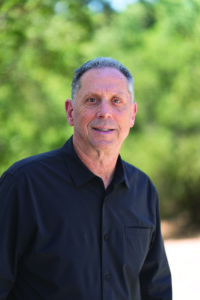 I grew up in Los Angeles in the 1960s and ’70s, when the smog got so bad they would actually cancel school. My chest burned when I breathed deeply. The Santa Monica beaches where I body surfed closed when the water turned toxic. During droughts, my father became the household water police, timing our showers and letting the lawn die. That was my first lesson that nature has limits.
I spent my first 10 years working in Washington, D.C., during the go-go ’80s. My cousins taught me the trade: designing, building, leasing and operating commercial buildings. Then I bought my own building—a dilapidated 1960s office building in Northern Virginia—renovated it and leased it.
The work fit. The image didn’t. Gold Cartier® watch. Ferragamo® shoes. A cologne that set off my allergies. My body rejected the costume before my mind caught up. Then the Savings and Loan (S&L) crisis took my building, and my development career with it. I drove back across the Bay Bridge with everything I owned in the car and no plan.
Sleeping on my best friend’s floor, I realized I actually cared about the work of the Green Building Subcommittee I’d started under environmental lawyer Mike Italiano at ASTM. It taught me how standards get made. However, the consensus process moved slowly and tended to lower the bar.
In 1993, Italiano, Rick Fedrizzi of Carrier and I founded the U.S. Green Building Council (USGBC). Sixty of us met in a round auditorium in Washington—manufacturers, utilities, designers, developers, nonprofits—sectors that never sat together. LEED (Leadership in Energy and Environmental Design) and Greenbuild came out of that room. In 1998, I flew to Tokyo on Earth Day and announced on a stage the World Green Building Council (WorldGBC), which I founded.
Later, I renovated my 1915 Craftsman bungalow to the world’s highest-rated LEED Platinum, with green cleaning built into the plan. I’m chemically sensitive. I’m the canary. My fourth book is Regen360: An Operating System for a Regenerative Earth.
You helped turn green building into a global movement. What did that movement accomplish?
Green building councils now operate in 85 countries. LEED alone covers about 30 billion square feet, and more than 200,000 people hold a LEED credential. Manufacturers reformulated entire product lines because rating systems, policy and incentives created a market. An industry with no vocabulary for any of this in 1993 now has one everywhere.
A few months ago, I attended a plaque ceremony at San Francisco International Airport’s Harvey Milk Terminal 1—LEED Platinum and Fitwel 3-Star. My longtime colleague Anthony Bernheim has been the green force at that airport for 15 years. In 1995, he and I worked together on the Sustainable Building Technical Manual—some 30 years from that first chapter to that plaque.
Here is where it falls short. We made the buildings better. We did not change the operating logic underneath. Carbon dioxide crossed 430 parts per million in 2025, and the rise is accelerating. New construction is the easy part. The carbon and water waste sits in the buildings already standing—the ones you operate. They need to go on a diet.
Speaking at the Finnish Consulate in Bel Air, California, in 2025, I said: “We’re putting solar panels on the Titanic. And it’s headed straight at the melting iceberg.” The room went quiet.
I am proud of what green building achieved. It is not enough to bend the curve. Sustainability, as we practiced it, is a less-bad strategy: less harm, less use, fewer emissions. That is a subtraction problem, and subtraction never gets you past zero.
Your Regen360 framework calls for moving beyond sustainability toward regeneration. What does that mean in practical terms for the people cleaning, maintaining and operating buildings every day?
Regenerative means the place is measurably healthier because you were there.
The question in Regen360 is simple: Does it accelerate HOPE—Health on Planet Earth? Start with the product, the benefit you claim to deliver. Subtract the inputs: chemistry, water, energy, equipment, labor, miles. Subtract the waste: packaging, effluent, off-gassing, emissions, injury, landfill. What’s left is the resultant—what the world actually got.
Product − Inputs − Waste = Resultant
The math isn’t clean. The variables don’t share a unit. What it does is force a complete list on the table before anyone signs off on the headline.
In cleaning and facilities, you control most of that list: chemistry, dilution, dwell time, filtration, water, equipment run hours, packaging, disposal and whether the person doing the work goes home with a headache or worse.
Where do you believe this industry’s power to drive meaningful change has been underestimated?
My father built the life we were all told to want. In August 2019, I sat beside him at the hospital, breathing through a cannula, after yet another surgery to cut out the spreading lung cancer that was threatening his life.
He was gone two months later. He had everything the scorecard rewards and had run out of the one thing nobody puts on a balance sheet. Air he could use.
You are in the air business. You’re in the water and waste business too. Most of you have never been told that.
First, we celebrated design and underweighted operations. A building is a 40-year proposition, and design is about 18 months. The rest runs on operations, and you’re there for all of it. Architect Carl Elefante said it best: “The greenest building is the one already built.” Yet the people keeping it healthy have the least say in the conversation.
Second, you are the last direct-contact chemistry in the building. This industry moved on green cleaning early, with Steve Ashkin relentlessly showing the way. The specification still stops at the label. The exposure doesn’t.
Third, your crews touch every square foot of the building, most days. You see the leak before the sensor does. You know which fixtures waste water, which zone runs overcooled, which floor sends its recycling to landfill.
What scorecard should organizations use to measure regenerative performance as well?
Keep return on investment (ROI)—business runs on it. Add a second ledger: HOPE. For a facilities operation, it comes down to five lines you can measure:
- Energy and water per square foot, trended over years.
- Waste diverted from landfill, third-party verified.
- Indoor environmental quality—measured particulates, carbon dioxide and volatile organic compounds (VOCs), not a product label.
- Embodied impact of what you buy, using Environmental Product Declarations (EPDs) where they exist.
- Human outcomes: occupant complaints, absenteeism, injury and turnover on your own crew.
That last line is missing from every scorecard I have seen.