ISSA Leg. & Reg. Update l Updated EPR Resource Now Available
 Welcome to the latest ISSA Legislative & Regulatory Update, a biweekly round up of the public policies currently impacting the cleaning and facility solutions industry. This update touches on ISSA’s newly updated EPR-compliance resource, ISSA Advocacy at the upcoming show, the 2027 ISSA Clean Advocacy Summit, and more.
Want to stay informed about critical government affairs impacting the entire built environment? Sign up here to have the ISSA Legislative & Regulatory Update emailed directly to you every other week.
ISSA Advocacy
ISSA Releases Updated EPR Resource: What Members Need to Know
What it means: Multiple emerging state extended producer responsibility (EPR) laws and regulations require manufacturers, distributors, and other brand owners to be financially and otherwise responsible for the packaging they put into the marketplace, including the costs of recycling it.
Why it matters: Eight states—California, Colorado, Maine, Maryland, Minnesota, Oregon, Vermont, and Washington—have enacted EPR laws affecting the cleaning and facility solutions industry. More states are considering similar measures, establishing new compliance obligations, costs, and potential penalties.
What ISSA is doing: To help ISSA members navigate this rapidly evolving regulatory landscape, ISSA updated its exclusive, members-only Summary of State Extended Producer Responsibility Laws, featuring:
- Three new state summaries—Maryland, Vermont, and Washington
- New penalties sections outlining the consequences of noncompliance in all eight states
- Updated California guidance on small-producer exemptions
- Oregon litigation update highlighting the National Association of Wholesaler-Distributors’ legal challenge
Stay informed. Stay compliant. Access ISSA’s updated EPR resource now
 Going to ISSA Show? Put Advocacy on Your Agenda
Heading to Las Vegas for ISSA Show North America 2026, November 16–19? Make advocacy part of your show experience.
From workforce challenges and the 2026 elections to career pathways and giving back, your ISSA Advocacy Team has a full lineup of opportunities to learn, engage, and make an impact.
Monday, November 16
All-Access Pass required for educational sessions
10:15-11:15 am PT
From Job to Profession: Building a Career Through ISSA’s Career Pathways and Apprenticeship Program
11:30 am-12:30 pm
Future-Proof Your Workforce: Labor Laws, Regulations & Immigration Policy
1:45-2:45 pm
The 2026 Election & Your Business: What’s at Stake for the Cleaning Industry
Tuesday, November 17
2:30-4 pm | ISSA End Period Poverty Service Project
Roll up your sleeves and make an impact! Join fellow show attendees at the ISSA Experience Hub (Booth #2417) to assemble personal-care bags for Nevada charities. Open to all attendees—no advance registration required. Sponsored by HOSPECO Brands Group
Plus: Visit the ISSA Advocacy Kiosk
Have a policy question or a business pain point you think ISSA Advocacy should know about? Stop by the ISSA Advocacy Kiosk at the ISSA Experience Hub (Booth #2417) throughout the show. Meet the team, learn what we’re working on, and tell us what’s affecting your cleaning business.
Learn more and register for ISSA Show North America 2026
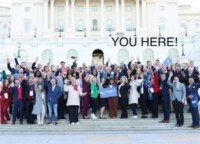
YOU should be in this ISSA Clean Advocacy Summit group photo next year!
You Showed Up. Congress Listened.
This spring, 140+ cleaning and facility solutions leaders from 30+ states came to Washington for the ISSA Clean Advocacy Summit, meeting with 150+ congressional offices and making the case for our industry, including authorization of EPA’s Safer Choice Program.
Now, bipartisan Safer Choice legislation has been introduced in both the U.S. House and Senate.
That’s advocacy in action and proof that showing up matters.
Ready to help create the next win? Join 150+ industry leaders at the 2027 ISSA Clean Advocacy Summit, April 12–13 in Washington, DC. We arrange the Capitol Hill meetings. You bring your story. Together, we make our industry heard.
Early-bird registration is open now—reserve your seat and help keep the momentum going.
Special thanks to Tork, an Essity Brand, Presenting Sponsor of the 2027 ISSA Clean Advocacy Summit. Interested in sponsoring the summit next year? Learn more here and contact us to put your brand in front of cleaning industry leaders.
 The Midterms Are Almost Here—Are You Ready?
What it means: Election Day is almost here, and the decisions made on November 3 will help shape the future of the cleaning and facility solutions industry.
Why it matters: With every U.S. House seat, 35 Senate seats, and 39 governorships on the ballot, this election will influence the policies that affect your business, from workforce and labor issues to environmental regulations and public health.
What ISSA is doing: Be prepared by visiting the ISSA Election Center, where you can:
- Register to vote
- Verify your voter registration
- Find your polling place
- View your ballot and candidates
- Access other essential voting resources
Every vote matters. Whether you vote early, absentee, or on Election Day, make a plan to cast your ballot and encourage your colleagues, family, and friends to do the same.
And join ISSA VP of Government & Public Affairs John Nothdurft for a free ISSA post-election webinar at 12 pm CT on December 2 to learn what the 2026 election results mean for your business and the cleaning and facility solutions industry. Reserve your spot today
Additional Updates
Regulatory
Scheduled PRIA 5 Fee Adjustment Takes Effect for Pesticide Registration Applications
The U.S. Environmental Protection Agency (EPA) reminded stakeholders that, in accordance with the Pesticide Registration Improvement Act of 2022 (PRIA 5), a 5% inflation adjustment increase in pesticide registration service fees will apply to covered applications starting October 1, 2026. According to EPA, this adjustment “ensures the continued modernization of the pesticide registration process and supports the agency’s commitment to robust, science-based evaluations.”
The 5% fee increase represents a statutory adjustment authorized by Congress contingent upon EPA’s implementation of process improvement recommendations contained in the Process Assessment Report that was required by PRIA 5. EPA has begun or completed 80% of the recommendations in the report. Learn more (EPA)
- DOL to increase minimum wage to $14/hour for federal contractors (Construction Dive)
- Build OSHA inspection readiness into your cleaning program (CMM)
Judicial
What’s Next for TSCA Following the Landmark Decision in East Fork Enterprises, Inc. v. EPA
On September 15, 2026, the U.S. Court of Appeals for the Fifth Circuit vacated the U.S. Environmental Protection Agency’s (EPA’s) risk management rule for methylene chloride, a widely used solvent, under the Toxic Substances Control Act (TSCA). This landmark case is the first time a federal court has substantively interpreted TSCA Section 6 chemical risk evaluation and risk management provisions since Congress overhauled the statute in 2016. The court’s decision has implications for not only the methylene chloride regulation but also EPA’s other final TSCA risk management rules, chemicals currently in the risk management rulemaking process, and chemicals further back in the risk evaluation pipeline. Learn more (The National Law Review)
Legislative
House Bill Proposes $25 Minimum Wage by 2031
A bill to raise the federal minimum wage to US$25 an hour has spent nearly six months in Congress, with lawmakers facing a narrowing window to advance the proposal before the current legislative session ends.
U.S. Representative Delia Ramirez (D-IL) introduced the Living Wage for All Act, H.R. 8555, on April 28. The legislation would gradually increase the federal minimum wage over the next few years, with different deadlines for large and smaller employers. Learn more (Yahoo)
State News
California’s Workplace AI Laws Raise Employer-Accountability Bar
On September 30, 2026, California enacted three new laws regulating workplace AI: SB 947, AB 1883, and SB 951. Together, these laws prohibit employers from relying exclusively on AI to discipline or terminate employees, restrict certain forms of AI-powered employee monitoring, and require additional disclosures when AI or automation contributes to workforce reductions. The laws underscore a broader new reality: employers must fully understand where AI is already embedded in their employment systems and how it is used. AB 1883 and SB 951 take effect January 1, 2027; SB 947’s requirements apply beginning July 1, 2027. Learn more (Baker Donelson)