ISSA Leg. & Reg. Update – Vote for the Future of Our Industry
 Welcome to the latest ISSA Legislative & Regulatory Update, a biweekly round up of the public policies currently impacting the cleaning and facility solutions industry. This update touches on preparing for the 2026 midterm elections, how EPR laws are reshaping distribution, a free September 30 webinar on implementing a period positive workplace, and more.
Want to stay informed about critical government affairs impacting the entire built environment? Sign up here to have the ISSA Legislative & Regulatory Update emailed directly to you every other week.
ISSA Advocacy
 The 2026 Election Is Almost Here—Are You Ready?
What it means: Election Day is nearly two months away and the decisions made on November 3 will help shape the future of the cleaning and facility solutions industry.
Why it matters: With every U.S. House seat, 35 Senate seats, and 39 governorships on the ballot, this election will influence the policies that affect your business—from workforce and labor issues to environmental regulations and public health.
What ISSA is doing: Be prepared by visiting the ISSA Election Center, where you can:
- Register to vote
- Verify your voter registration
- Find your polling place
- View your ballot and candidates
- Access other essential voting resources
Every vote matters. Whether you vote early, absentee, or on Election Day, make a plan to cast your ballot and encourage your colleagues, family, and friends to do the same. Visit the ISSA Election Center now.
How EPR Is Reshaping Distribution with a $40 Million Packaging Bill
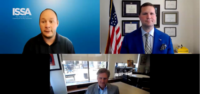 What it means: Extended Producer Responsibility (EPR) laws are now live in Oregon and Colorado, while California has opened its registration window ahead of billing in 2027, and a federal judge in Portland is expected to rule before the end of August on whether the first of those laws is constitutional at all.
Why it matters: Any company introducing covered packaging material into a state with an EPR law must report the annual poundage to that state’s environmental agency and pay a fee tied to the volume of material. What matters is not who manufactured the product but whether the material crossed into the state and is expected to end up in a recycling center or a landfill.
According to Eric Hoplin, President and CEO of the National Association of Wholesaler-Distributors (NAW), the laws are “much more onerous than I think anybody expected, both on the compliance side and certainly on the cost side.” National distributors selling cleaning products into the state, for example, may be on the hook for US$30–$40 million in fees per year in California alone, while some of the bigger players in the jansan space face bills topping eight figures. Learn more (ISSA)
What ISSA is doing: ISSA recently hosted a webinar on Navigating Extended Producer Responsibility: Litigation Updates from NAW. View the webinar here.
ISSA also published a white paper for its members summarizing state-by-state EPR laws, including how products are classified, and is currently updating this compliance resource as more states act on the issue. View ISSA’s EPR white paper here.
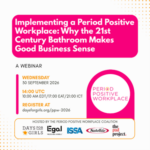 Free Webinar — Implementing a Period Positive Workplace: Why the 21st Century Bathroom Makes Good Business Sense
Join the Period Positive Workplace Coalition, including ISSA, at 9 am CT on September 30 for a free discussion on the practicalities of implementing menstrual-friendly bathrooms at work. Save your seat now
Additional Updates
Regulatory
U.S. Imposes 50% tariffs on Canada after Failed Talks; Canada to Match Them “Dollar for Dollar”
The U.S. imposed 50% tariffs on US$20 billion worth of Canadian products early Saturday after last-ditch negotiations failed to resolve the latest strain in already tense relations between the historic allies. President Trump’s import taxes will affect about 5% of what Canada ships to the U.S. every year, including “products ranging from hockey sticks to tongue depressors.”
Canada’s leader said that it would retaliate beginning September 8. The dollar-for-dollar retaliation would target steel, dairy, appliances, agricultural equipment, pulp and paper, and electronics. Learn more (CBS News)
And yesterday, Trump said that the U.S. would impose 50% tariffs on automobiles and parts from Canada starting in January, the latest escalation in a tit-for-tat trade conflict that erupted over the weekend. Learn more (CNBC)
- OSHA renews warehouse safety emphasis program, expands inspection guidance (OH&S)
- Corporate America receives billions in tariff refunds (CNN)
Immigration – Temporary Protected Status
- TPS for Salvadorans ends September 9 (Times of San Diego)
- TPS recipients hope a potential change of power in Congress provides relief from deportation (Houston Public Media)
Judicial
Federal Judge Vacates Trump Policy that Suspended Processing of Immigration Visas from 75 Countries
A federal judge vacated a Trump administration policy that suspended the processing of visas from 75 countries, including Afghanistan, Iran, Russia, and Somalia, whose nationals the Trump administration deemed likely to require public assistance in the United States. Learn more (PBS News)
- U.S. de minimis elimination upheld by trade court (Supply Chain Dive)
Legislative
Funding Patch Passes Senate to Head off Fall Shutdown
The Senate easily passed a bipartisan continuing resolution, likely easing the traditional September rush to head off a partial government shutdown in October.
On a vote of 90-6, the Senate passed a measure that would extend current funding through December 11, giving lawmakers about 10 extra weeks to complete full-year appropriations bills for fiscal 2027.
But the bill still requires a vote in the House, which won’t be back in session until the first week of September. The House passed a more bare-bones funding extension last month without many of the “anomalies” or deviations in current spending requested by the Trump administration. Learn more (Roll Call)
State & Local News
Minnesota: Minimum wage to increase to US$11.87 (WDIO-ABC)
California: NAW-backed coalition moves to block state’s EPR law (MDM)
Vermont: EPR law tackles household hazardous waste (Vermont Agency of Natural Resources; Note: Law applies only to household/consumer products; does not regulate commercial or institutional-use products)
Ohio: Columbus first U.S. city to provide free period products at major sports venues (CMM)
Illinois: Expanded access to adult changing stations in public spaces (CMM)