ISSA Leg. & Reg. Update – Industry Urges Congress to Include MOLD Act in NDAA
 Welcome to the latest ISSA Legislative & Regulatory Update, a biweekly round up of the public policies currently impacting the cleaning and facility solutions industry. This update touches on ISSA and NORMI urging Congress to include the MOLD Act in the FY2027 NDAA, the launch of a bipartisan governors’ task force focused on immigration reform, the last chance to register for ISSA’s free EPR webinar this Wednesday, and more.
Want to stay informed about critical government affairs impacting the entire built environment? Sign up here to have the ISSA Legislative & Regulatory Update emailed directly to you every other week.
ISSA Advocacy
ISSA, NORMI Urge Congress to Support MOLD Act Provision in NDAA
What it means: ISSA and NORMI, along with nearly 20 organizations from the military, industry, veterans, and civilian sectors, signed on to a letter to leaders of the U.S. Senate and House Armed Services Committees urging them to include Section 2825 of S. 4784 in the final version of the Fiscal Year 2027 National Defense Authorization Act (NDAA). Section 2825, based on the Military Occupancy Living Defense (MOLD) Act, offers effective solutions to address mold and other environmental-health risks in military family housing.
Why it matters: Thousands of American military families reside in installation housing that is operated and maintained by private-housing contractors. However, far too often, military families in such housing encounter toxic, unsafe living conditions, including mold, pest infestations, faulty maintenance, and more.
 Section 2825 of S. 4784 would establish clear standards for mold and humidity, mandate independent third-party inspections by contractors not affiliated with housing companies, and require inspections in several critical scenarios. Importantly, the provision also would provide military families with the same protections as residents of Section 8 housing by giving the federal government the right to withhold payment to the privatized-housing company when a unit fails inspection.
What ISSA is doing: ISSA and NORMI are proud endorsers of the MOLD Act alongside a broad coalition of military family and industry organizations. Both associations remain committed to working with Congress to ensure that the men, women, and children who serve and support our nation’s armed forces have access to safe, healthy, and well-maintained housing. View the letter
Bipartisan Governors Launch Task Force to Tackle Immigration Reform
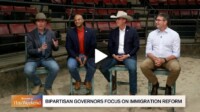
What it means: Oklahoma Governor Kevin Stitt, Maryland Governor Wes Moore, Utah Governor Spencer Cox, and Delaware Governor Matt Meyer announced the launch of a bipartisan immigration task force to find solutions to one of America’s most politically divisive issues.
Why it matters: With more than 540,000 U.S. cleaning job openings expected each year, ensuring that the cleaning and facility solutions industry has the workers that it needs to meet growing demand and higher standards is a government-affairs priority for ISSA.
What ISSA is doing: ISSA State Advocacy Leader Paul Merena, Vice President of Multicorp in Maryland, recently represented the industry in discussions with Governor Moore, the Governor’s staff, and other Maryland small businesses navigating challenges related to federal immigration policy. Learn more here (Bloomberg Television) and here (Gov. Moore)
Last Chance to Register—Free Navigating EPR Webinar
 Extended producer responsibility (EPR) laws are rapidly emerging as one of the most important state policy issues impacting the cleaning and facility solutions industry. With more states adopting packaging EPR laws and regulations each year, manufacturers and distributors need to understand what’s changing and what’s at stake.
Join ISSA and the National Association of Wholesaler-Distributors (NAW) for a free webinar, 1–2 pm CT this Wednesday, August 12, to explore the latest developments in the EPR landscape.
Why attend? You’ll gain practical insights into:
- The current EPR litigation landscape
- Why EPR is a growing concern for manufacturers, distributors, and other channel partners
- How NAW is leading legal challenges in key states
- What participation in NAW’s coalition efforts looks like
- How cleaning companies can have a seat at the table as these cases develop
This is a timely opportunity to hear from industry experts, better understand the legal and regulatory landscape, and learn how your company can help shape the future of EPR policy.
Register now and stay ahead of one of the fastest-moving policy issues affecting our industry.
Additional Updates
Regulatory
Ban on New Foreign Robots Includes Robotic Vacuums
The Trump administration unveiled updated bans that target imports of new Chinese robots and power inverters. The goal of the ban is to protect the U.S. artificial intelligence buildout from national security threats and re-shore key industries slated for explosive growth.
The U.S. Federal Communications Commission (FCC) ban on foreign-produced advanced robotic devices and power inverters includes more than mobile robots, such as humanoids and quadrupeds. PC Mag reported that the ban also includes robot vacuums and robot lawn mowers. The FCC defines advanced robotic devices as a “mechanical mobile device, including autonomous mobile robots, humanoid robots, and quadrupeds, that:
- Is capable of locomotion, obstacle avoidance, navigation, or movement on the ground.
- Operates at a distance from a human operator or supervisor based on commands or in response to sensor data or any combination thereof.
- The combined weight of the device and, if applicable, ground station or docking station is over 4.4 pounds.
- Contains a component falling within each of the below [features]:
- A sensor capable of perceiving its environment.
- A component that is capable of providing network connectivity (wired or wireless, including Bluetooth/WiFi, cellular, or satellite) with connection speeds of at least 200 kilobits per second in either direction.
- Software running either locally or remotely, including firmware and AI or machine-learning model weights, that controls the robot’s autonomous navigation or movement perception, data collection, or remote command-and-control.”
The ban does not affect any previously purchased devices or existing products that have already received FCC equipment authorization for sale in the U.S. Additionally, PC Mag reported that a separate FCC order indicates that any existing robot vacuums already authorized “may continue to receive software and firmware updates that mitigate harm to US consumers at least until Jan. 1, 2029.”
ISSA is closely monitoring this updated regulatory ban and will keep our members apprised of what it may mean for them and the types of cleaning-related equipment that the ban includes. Learn more (CMM)
- EPA releases draft TSCA risk evaluations for two chemicals—oDCB and pDCB—found in household and commercial products (EPA)
- EPA releases draft exposure analysis for trans-1,2-dichloroethylene, 1,2-dichloropropane, advance review under TSCA (EPA)
- CDC study suggests the threat of mold-associated illnesses may be underappreciated (AP)
Judicial
Twenty-Five States Sue Trump over Section 301 Forced-Labor Tariffs
A 25-state coalition sued the Trump administration over its Section 301 tariffs on 60 trading partners that the administration accused of failing to prevent goods made with forced labor from entering the U.S.
The lawsuit, filed in the U.S. Court of International Trade, challenges the administration’s decision to impose tariffs of 10% or 12.5% on dozens of trading partners, including the European Union, China, Canada, and Mexico. The plaintiffs assert that the levies were imposed under the “guise of combating forced labor in global trade” and should be ruled unlawful, with refunds made to the states.
The states filed the suit more than a week after two U.S. businesses launched the first legal challenge to the forced-labor tariffs in the Court of International Trade. Learn more (Supply Chain Dive)
Legislative
Bill Introduced to Analyze IAQ in Federal Buildings
U.S. Representative James R. Walkinshaw (D-VA-11), joined by Representatives Brian Fitzpatrick (R-PA-01), Paul Tonko (D-NY-20), Don Beyer (D-VA-08), and Eleanor Holmes Norton (D-DC), introduced the bipartisan Federal Facilities Indoor Air Quality Assessment Act to identify and address air quality and ventilation problems across federal buildings. The legislation directs the Government Accountability Office (GAO) to conduct a comprehensive review of indoor air quality, ventilation, heating, and air conditioning system performance across federal facilities. The GAO would then report its findings and recommendations to Congress within 12 months. Agencies found to have material indoor air quality deficiencies would have six months to submit corrective action plans. Learn more (Rep. Walkinshaw)
- States may get power to sponsor worker visas in the U.S. under new bipartisan bill (The Economic Times)
State & Local News
Colorado: NAW Sues to Block EPR Law in Latest Legal Filing
The National Association of Wholesaler-Distributors (NAW) filed a federal lawsuit and motion for preliminary injunction challenging Colorado’s Extended Producer Responsibility (EPR) packaging law.
NAW announced July 30 that it filed NAW v. Ryan in the U.S. District Court for the District of Colorado, challenging the state’s Producer Responsibility Program for Statewide Recycling Act, also known as House Bill 22-1355. The association is asking the court to block enforcement of the law while the case proceeds. The Colorado filing follows NAW’s earlier legal challenges to EPR laws in Oregon and California. Learn more (MDM)
Join our free, timely webinar Navigating EPR: Litigation Updates from NAW this Wednesday, August 12 to learn more about EPR litigation as it unfolds and how your cleaning company can participate in relevant coalition-based legal and policy efforts. Register now
- New requirements on employment-eligibility verification (The National Law Review)
California: Statewide minimum wage increases again in 2027: Top employer considerations beyond the new rate (JD Supra)
- Alameda County weighs nation’s first $30 minimum wage (ABC 7)
- New law targets employers over Medicaid costs (The Sacramento Bee)
Connecticut: Minimum wage rising to $17.48 in January (HBJ)
Illinois: Cosmetic ingredients restricted beginning July 2028 (JD Supra)
Virginia: New pay-transparency law changes rules for job postings (Virginia Mercury)
New Mexico: PFAS labeling and reporting requirements don’t apply to industrial products (The National Law Review)