ISSA Leg. & Reg. Update – ISSA Announces Registered Apprenticeship Program
 Welcome to the latest ISSA Legislative & Regulatory Update, a biweekly round up of the public policies currently impacting the cleaning and facility solutions industry. This update touches on ISSA announcing a new Cleaning Technician Registered Apprenticeship Program, the association opposing a New Hampshire bill restricting scented products, hosting your elected officials at your place of work, and more.
Want to stay informed about critical government affairs impacting the entire built environment? Sign up here to have the ISSA Legislative & Regulatory Update emailed directly to you every other week.
ISSA Advocacy
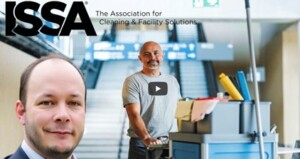
| In this short video, ISSA’s John Nothdurft and Jeff Cross discuss the association’s new Cleaning Technician Apprenticeship, a program to create structured career pathways and raise the standard of training across the industry. |
ISSA Announces Registered Apprenticeship Program
What it means: ISSA announced the creation of its Cleaning Technician Registered Apprenticeship Program, which brings the cleaning profession into the national apprenticeship framework for the first time.
Recently approved by the U.S. Department of Labor (DOL), ISSA’s Cleaning Technician Registered Apprenticeship Program is a structured workforce-development pathway to prepare individuals for professional careers in cleaning and facility services across commercial, institutional, and industrial environments. The program combines on-the-job learning with nationally recognized education and certification, giving apprentices portable credentials and a clear career pathway while giving employers a consistent, skilled talent pipeline.
Why it matters: ISSA’s Registered Apprenticeship directly addresses labor shortages and workforce development gaps by offering a competency-based, nationally vetted program that emphasizes safety, infection prevention, and professional standards. According to DOL, employers receive US$1.47 for every $1 invested in apprenticeships through improved productivity, lower turnover, and reduced recruitment costs.
Additionally, 97% of employers using registered apprenticeships report increased worker productivity, and 92% report improved employee engagement and retention. Employers in certain states also may be eligible for tax credits to offset the costs of qualified educational expenses and wages for each apprentice at their organization.
For apprentices, the program offers a nationally recognized credential, progressive wage increases, a structured path to supervisory roles, and access to financial support, including 529 plans, Workforce Innovation and Opportunity Act funding, and state tax credits.
What ISSA is doing: ISSA’s Cleaning Technician Registered Apprenticeship is a one-year, competency-based program combining structured training and applied workplace experience with a nationally recognized curriculum and certifications and a focus on safety, infection prevention, and professional standards. Learn more here and let us know if you’re interested in participating in our apprenticeship pilot here
ISSA Opposes NH Bill to Restrict Scented Products
What it means: The New Hampshire Senate is considering HB 1544, which would prohibit the use of scented products in public areas of state buildings, including scented cleaning products and scented products in restrooms. The bill has already passed the state’s House of Representatives.
Why it matters: ISSA strongly opposes HB 1544 because the legislation adopts an inappropriate policy standard by treating fragrance as a basis for broad product exclusion in public buildings.
While the bill is framed as a response to concerns about indoor environments, it would impose a categorical restriction on fragrance products that is overly broad, poorly defined, and not an appropriate basis for public procurement or facility management policy. Additionally, the legislation raises significant concerns by effectively legislating procurement decisions based on a single attribute, rather than allowing for a balanced, risk-based evaluation that considers product performance, safety, cost, and operational needs.
What ISSA is doing: ISSA, along with five other organizations representing a broad cross-section of companies involved in the manufacture, formulation, distribution, and sale of products for household, institutional, commercial, and industrial use, recently sent a letter to the New Hampshire Senate opposing HB 1544.
Take action: Live and/or work in New Hampshire? Take a moment to urge your state Senator and Governor Ayotte to vote NO on HB 1544. Take action now
Host Your Elected Officials—Showcase the Real Work behind Clean, Safe Spaces
What it means: Open your doors to your elected officials and give them a firsthand look at how your cleaning and facility solutions operation keeps people healthy, buildings running, and businesses open.
Why it matters: From infection-prevention protocols to workforce training and supply-chain pressures, our industry operates at the intersection of public health and the built environment. A site visit turns abstract policy into real-world impact, helping lawmakers understand the essential role that your team plays every day. These conversations can directly influence governmental decisions on issues like labor shortages, workforce development, and funding that affect your bottom line.
What ISSA is doing: ISSA Advocacy is elevating the voice of the cleaning and facility solutions industry by connecting our member companies with policymakers. We’ll handle the logistics—from outreach and scheduling to messaging and prep—so that hosting a site visit is simple and seamless.
Take action: Ready to host a site visit with your elected officials? Contact ISSA’s Stacy Seiden to get started. We’ll make it easy to plan a productive, policy-focused visit that highlights your business’s expertise and priorities. Note: these are official, nonpartisan policy visits, not campaign events.
Additional Updates
Legislative
Trump Signs DHS Legislation, Ending Record-Breaking Shutdown
President Trump signed bipartisan legislation to fund key agencies at the U.S. Department of Homeland Security (DHS), officially concluding the record-breaking shutdown. After more than 10 weeks, the president’s signature restores funding to the Coast Guard, TSA, Secret Service, FEMA, and the Cybersecurity and Infrastructure Security Agency, along with other sub-agencies that don’t touch on immigration enforcement.
Congressional Republicans are separately working to enact tens of billions of dollars for Border Patrol and Immigration and Customs Enforcement through a party-line reconciliation package, a process that progressed with the recent adoption of a framework to unlock a special budget authority to bypass the Senate filibuster. Learn more (Politico)
- TSCA Bill Introduced in the Senate (Sen. Ricketts)
Regulatory
First Trump Tariff Refunds Expected around May 11
The federal government expects to issue the first refunds of President Trump’s invalidated tariffs on or about May 11, according to new court documents. U.S. Court of International Trade Judge Richard Eaton, who oversees the process, revealed the timeline following a closed hearing last week.
Customs and Border Protection’s electronic system went live last month. Importers have already successfully uploaded 21% of the affected entries into the system, according to Eaton’s new order. Importers and trade lawyers told The Hill that the system is generally functioning, though it has had some glitches as tens of thousands of companies flock to get their money back. Learn more (The Hill)
State News
Minimum Wage Battles Heat Up Nationwide
Lawmakers in Pennsylvania, Louisiana, Oklahoma, New York City, and more are debating the minimum wage. Learn more (CMM)
Air Quality
Colorado: The Colorado Air Quality Control Commission adopted measures to control emissions of five priority air toxic contaminants: benzene, ethylene oxide, formaldehyde, hexavalent chromium compounds, and hydrogen sulfide. Certain facilities that emit these pollutants in Colorado will have to reduce emissions by implementing new technologies, adjusting work practices, and using fewer toxic materials. Learn more (CMM)
Illinois: The Illinois General Assembly passed a plan to improve the indoor air quality for schools. This plan states that school districts should ensure that all active classrooms are equipped with air-quality monitors. The proposal now heads to the Senate for further consideration. Learn more (WAND News)
General Business Issues
Maryland: Governor Moore signed HB0242/SB0216, which updates the state’s unemployment insurance laws to strengthen confidentiality protections for personal and employer information. The new law clarifies what information is confidential, sets rules for when it can be shared, and increases penalties for unauthorized disclosures. The law takes effect October 1, 2026. (NAW)
Maine: Governor Mills signed HP 1425/LD 2110, which updates the state’s workplace substance-use testing laws. The new law clarifies when and how employers may conduct testing, adds new definitions and objective standards, and establishes procedures for both random and criteria‑based testing. It also strengthens confidentiality and employee protections, shortens the rehabilitation period, shifts most rehabilitation costs to employees unless covered by insurance, and protects lawful medical cannabis use. The law takes effect September 11, 2026. (NAW)
Virginia: Governor Spanberger signed HB1092/SB288, which requires the commonwealth to establish standards for heat illness prevention that protect employees working indoors and out. The new law directs the Safety and Health Codes Board to adopt regulations mandating employers provide water, access to shade or climate control, rest periods, acclimatization procedures, and training. The board must develop these regulations by May 1, 2028. (NAW)