ISSA Leg. & Reg. Update – Last Chance to Secure Your Spot on Capitol Hill!
 Welcome to the latest ISSA Legislative & Regulatory Update, a biweekly roundup of the public policies currently impacting the cleaning and facility solutions industry. This update touches on your last chance to register for the 2026 ISSA Clean Advocacy Summit, DOL’s proposed independent contractor rule, ISSA’s Texas Advocacy Happy Hour on April 8, and more.
Want to stay informed about critical government affairs impacting the entire built environment? Sign up here to have the ISSA Legislative & Regulatory Update emailed directly to you every other week.
ISSA Advocacy
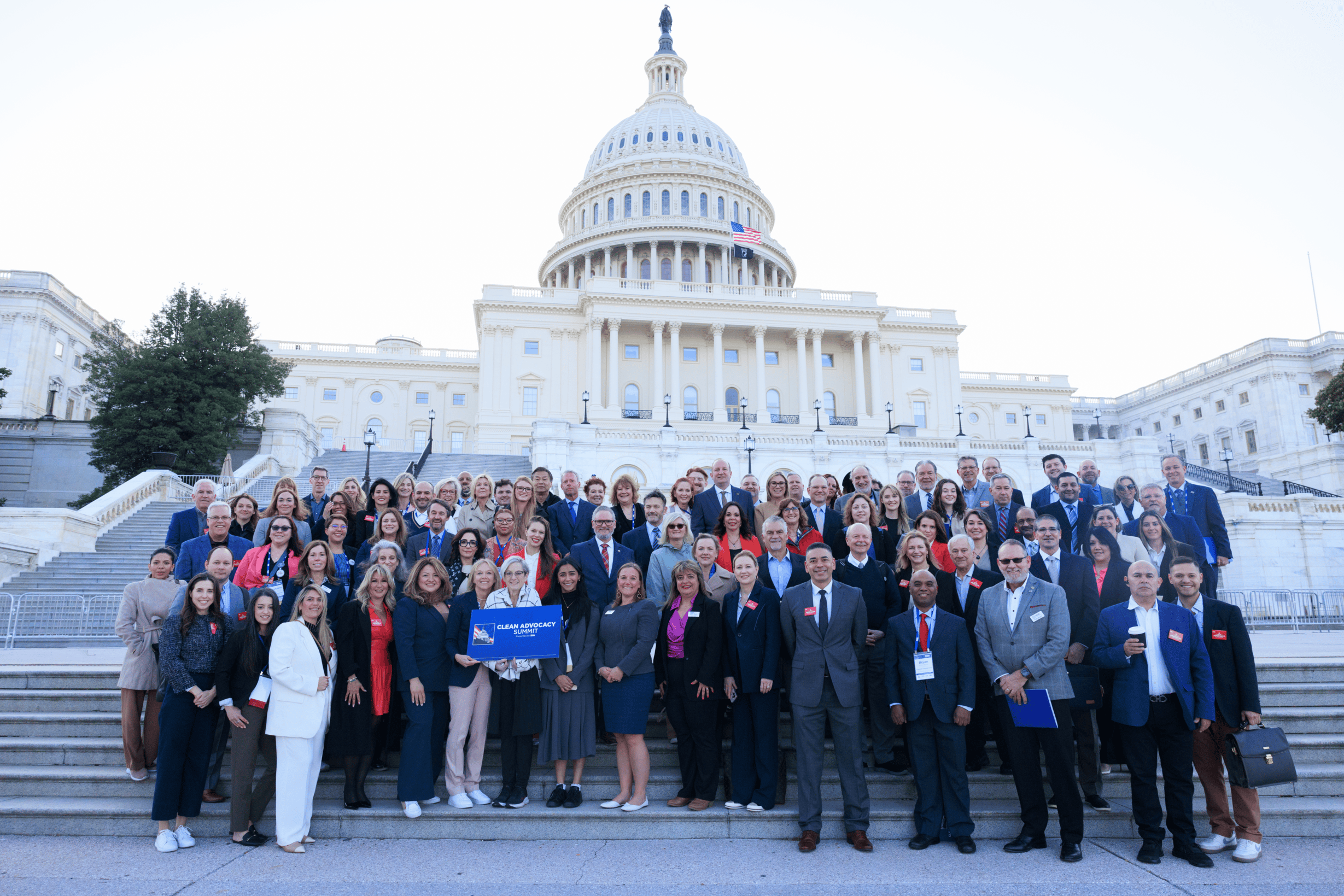
 Final Call: Register for the 2026 Summit to Influence Congress
The 2026 ISSA Clean Advocacy Summit is almost here and registration closes March 15. If you’ve been waiting for a sign to register, consider this your final call and lucky break. 🍀
March 23–24 | Washington, DC
This is the only opportunity each year for the cleaning and facility solutions industry to unite in the nation’s capital to make our collective voice heard—directly, credibly, and with real impact. When you attend, you’ll:
- Hear directly from Washington insiders, including EPA Assistant Administrator Douglas Troutman, and top advocacy experts you won’t find anywhere else.
- Get insider briefings on the policies shaping your business—from labor shortages and workforce reforms to strengthening EPA and its Safer Choice Program and ending period poverty.
- Hike the Hill to meet with your congressional offices and show how our industry protects health, creates jobs, and strengthens the U.S. economy.
- Connect with industry leaders nationwide who share your challenges and your influence.
- Celebrate the value of clean at the inaugural International Cleaning Week Awards Dinner.
Registration Rates
ISSA Member: $550 | Nonmember: $750
☘️ Don’t press your luck—registration closes March 15 and space is limited. Make sure your seat is secured, and your voice is heard.
👉 Register now before time runs out!
DOL Proposes New(ish) Independent Contractor Rule
What it means: The U.S. Department of Labor (DOL) proposes a new rule designed to differentiate between employees and independent contractors. If adopted, the rule would establish a standard similar to the one the DOL issued under the first Trump administration. Like that first standard, the new rule aims to simplify worker classification by focusing on two main factors—control over the work and entrepreneurial opportunity. While other factors like amount of skill and degree of permanence of the relationship would still be relevant, they would usually be unnecessary when the two main factors point in the same direction.
Why it matters: The proposed rule arrives after years of back and forth over worker classification. Generally, the Fair Labor Standards Act (FLSA) distinguishes between independent contractors and employees by looking at “economic realities.” If, as a matter of economic reality, workers depend on a particular employer for work, they are considered employees. But if they are in business for themselves, they are independent contractors. This distinction is important because the FLSA applies only to employers and employees. So, if workers are considered independent contractors, then they are not owed FLSA overtime or minimum wages. Instead, their compensation is usually based on a contract.
What ISSA is doing: The DOL comment period is open for 60 days, closing April 28, 2026. ISSA welcomes comments from our member companies about the proposed rule for possible inclusion in the association’s relevant comments to DOL.
Please submit comments here by April 1. In the meantime, employers should continue to be guided by existing precedents (typically found in court decisions applying some version of the economic reality test) regarding the classification of a worker as an employee or independent contractor. Learn more here (Littler) and here (CMM)
Texas Cleaning & Facility Solutions Leaders, This One’s for You
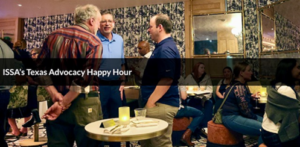
Everything’s bigger in Texas, including our voice. Cleaning and facility solutions industry leaders in the Lone Star State are invited to join us in raising a glass and your impact at ISSA’s Texas Advocacy Happy Hour, 4 pm to 6 pm on April 8 in Irving, Texas.
This isn’t a sit-and-listen program. It’s a connect-and-converse gathering designed to bring together Texas cleaning and facility professionals like you and invited policymakers in a relaxed, welcoming setting. Enjoy appetizers, wine and beer, and high-value networking, plus timely insights from ISSA’s Government Affairs team and Texas State Advocacy Leaders on what’s happening in Washington, DC and right here at home. Register now
Additional Updates
Tariffs
Trade Court: Companies Entitled to Refunds for Trump Tariffs Overturned by Supreme Court
A federal trade court ordered the Trump administration to begin refunding the more than US$130 billion the administration collected in the global tariffs invalidated by the U.S. Supreme Court last month.
At a hearing involving one company’s fight for a refund, Judge Richard Eaton of the U.S. Court of International Trade said the repayment process should be straightforward and subsequently issued an order directing the administration to begin the process of refunding importers. More than 2,000 lawsuits have been filed by companies seeking to recoup their money.
The order requires U.S. Customs and Border Protection to issue refunds by recalculating the initial duties importers paid, excluding the tariffs voided by the high court. The administration is expected to appeal. Learn more (NBC News)
More Than 20 States Sue over Trump’s New Global Tariffs
Two dozen states challenged President Trump’s new global tariffs, filing a lawsuit over import taxes he imposed after a loss at the Supreme Court. The Democratic attorneys general and governors in the lawsuit argue Trump is overstepping his power with planned 15% tariffs on much of the world. Trump has said the tariffs are essential to reduce America’s longstanding trade deficits.
Trump imposed duties under Section 122 of the Trade Act of 1974 after the Supreme Court struck down tariffs he imposed last year under an emergency powers law. Section 122, which has never been invoked until now, allows the president to impose tariffs of up to 15%. They are limited to five months unless extended by Congress. Learn more (AP)
Bessent: Global 15% Tariff Starts Soon
President Trump’s recently announced 15% global tariff will likely be implemented soon, rising from its current rate of 10%, according to U.S. Treasury Secretary Scott Bessent. Learn more (CNBC)
Regulatory
NLRB Reverts to Joint Employer Rule Crafted in Trump’s First Term
The U.S. National Labor Relations Board (NLRB) announced a final rule to withdraw its Biden-era joint employer rule in favor of a standard the board adopted in 2020 during the first Trump administration. A federal judge previously vacated the now-withdrawn rule, which was published in 2023, because it was both “contrary to law” and “arbitrary and capricious,” following a challenge filed by business groups. NLRB said the 2023 rule has never taken effect and the 2020 rule was and remains the operative rule for determining joint employer status under the National Labor Relations Act. Learn more (Construction Dive)
Legislative
House Approves Bill to End DHS Shutdown, Roadblocks Remain in Senate
The U.S. House of Representatives passed a measure to fund the U.S. Department of Homeland Security (DHS) last week, but Senate Democrats blocked similar legislation, meaning the partial government shutdown will continue for now. The House approved the measure to fund DHS through September in a 221 to 209 vote. Earlier in the day, the Senate voted 51 to 45 to move forward, failing for a third time to reach a 60-vote threshold needed to advance. President Trump announced shortly before the Senate vote he was replacing DHS Secretary Kristi Noem, adding a new twist to negotiations. Some Democrats indicated the move could help lead to a compromise. Learn more (CBS)
State News
VA Court Clarifies State’s Ban on Non-compete Agreements against Low-Wage Workers
The Court of Appeals of Virginia ruled in Sentry Force Security, LLC v. Barrera that employers in the state: (i) can enforce customer non-solicitation clauses that restrain low-wage workers from directly soliciting a customer, (ii) cannot enforce customer non-solicitation clauses that purport to restrain low-wage workers from accepting unsolicited business from a customer, and (iii) cannot enforce employee non-solicitation provisions against low-wage workers. Learn more (The National Law Review)
Environmental Legislation
GA: EPR Bill Introduced
HB 1237 would create a statewide system in Georgia making producers responsible for funding and managing recycling, reuse, and deposit return programs for packaging, paper, and beverage containers. It would set standards for recycling and reuse, ban certain toxic substances in packaging, and establish oversight and enforcement by the Department of Natural Resources. (NAW)
GA Senate considers bill to place PFAS lawsuits under state control (Channel 9 ABC)
AL Governor Signs Controversial Environmental Regulation Bill
Alabama Governor Kay Ivey signed into law a controversial bill, SB 71, that could weaken the state’s environmental regulations. The legislation prohibits Alabama from having stricter environmental regulations than the federal government. Learn more (Alabama Reflector)
CA, Congress Take Different Paths on Recycled Content
California is taking up legislation that would crack down on recycled content claims for plastics made with chemical recycling. It’s a move that comes a week after a bipartisan group in Congress introduced industry-backed legislation that would go in the opposite direction. Learn more (Plastics News)
Minimum Wage Legislation
MD: Push by Lawmakers to Increase Minimum Wage Again
A proposed plan by Maryland lawmakers could raise the minimum wage to US$25, up from $15. The Living Wage For All Act would increase the pay by 2030. The legislation also would eliminate the tip credit starting in 2031 and automatically increase wages with inflation starting in 2033. Learn more (CBS News)
WI: $15 Minimum Wage Proposed
A group of Wisconsin Democrats and labor leaders are pushing a minimum wage bill that would increase the state’s minimum wage from US$7.25 to $15 immediately, progressively increase that to $20 by 2030, and then have that wage rise with inflation thereafter. Learn more (CMM)