ISSA Leg. & Reg. Update – NIOSH Cuts Reversed
 NIOSH Cuts Reversed
Welcome to the latest ISSA Legislative & Regulatory Update, a biweekly roundup of the public policies currently impacting the cleaning and facility solutions industry. This update touches on the Trump administration reversing staffing cuts at the National Institute for Occupational Safety and Health, how a bill recently introduced in the U.S. Senate takes a hard look at mold, 2026 ISSA Policy Priorities, and more.
Want to stay informed about critical government affairs impacting the entire built environment? Sign up here to have the ISSA Legislative & Regulatory Update emailed directly to you every other week.
ISSA Advocacy
Job Cuts Reversed at U.S. Safety Research Agency
What it means: The Trump administration reversed its deep staffing cuts to the U.S. National Institute for Occupational Safety and Health (NIOSH), reinstating hundreds of employees whose work underpins U.S. workplace health and safety.
Why it matters: “Reversing the proposed cuts to NIOSH is a positive decision for workers, employers, and public health,” said John Nothdurft, Director of Government Affairs for ISSA. “NIOSH plays a critical role in protecting the health and safety of millions of frontline workers, including those in the cleaning and facility solutions industry. The agency’s research and guidance have been critical in helping employers prevent injuries, reducing exposure to harmful substances, and creating safer workplaces for more than 50 years.”
What ISSA is doing: ISSA strongly advocated for reversing these recent staffing cuts at NIOSH. According to Nothdurft, the association will “continue to support funding for NIOSH so that it can ensure the best available science is used to guide occupational health and safety policy.” Learn more (Cleaning & Maintenance Management)
New Senate Bill Takes a Hard Look at Mold
What it means: After years of concerns from military families about unsafe living conditions, a new bill in the U.S. Senate takes direct aim at mold, moisture, and accountability gaps in military housing.
Why it matters: Known as the MOLD Act, the legislation would require the Department of Defense to set enforceable health and safety standards, mandate independent third-party inspections, and ensure that certified professionals handle mold assessment and remediation.
What ISSA is doing: In this video, we break down what the bill would change, why industry standards like the ANSI/IICRC S520 matter, and how leaders, including Senator Richard Blumenthal (CT-D) and organizations like Institute of Inspection, Cleaning and Restoration Certification and ISSA, are shaping the conversation. Watch the video now (ISSA)
2026 ISSA Policy Priorities for a Cleaner, Healthier Future
What it means: Building on its advocacy successes in 2025, ISSA recently unveiled the association’s 2026 Policy Priorities.
Why it matters: These priorities are aimed at fostering growth, innovation, and sustainability in the cleaning and facility solutions industry by focusing on ensuring cleaner, healthier spaces while advancing the industry’s competitiveness, workforce, and improved regulatory landscape. John Nothdurft, ISSA’s Director of Government Affairs, emphasized the importance of these priorities: “The cleaning industry has made huge strides during the last five years in educating and advocating for the industry on topics such as labor, trade, and taxes. Federal and state lawmakers now understand how essential the cleaning and facility solutions industry is to public health and economic growth.”
What ISSA is doing: According to Nothdurft, these ISSA policy priorities for 2026 “align with the association’s commitment to innovation and sustainability. They are a reminder to policymakers how essential our industry is in creating cleaner, healthier, and more accessible spaces.” Learn more (Cleaning & Maintenance Management)
Your Seat in DC Awaits: Register Now for the Clean Advocacy Summit
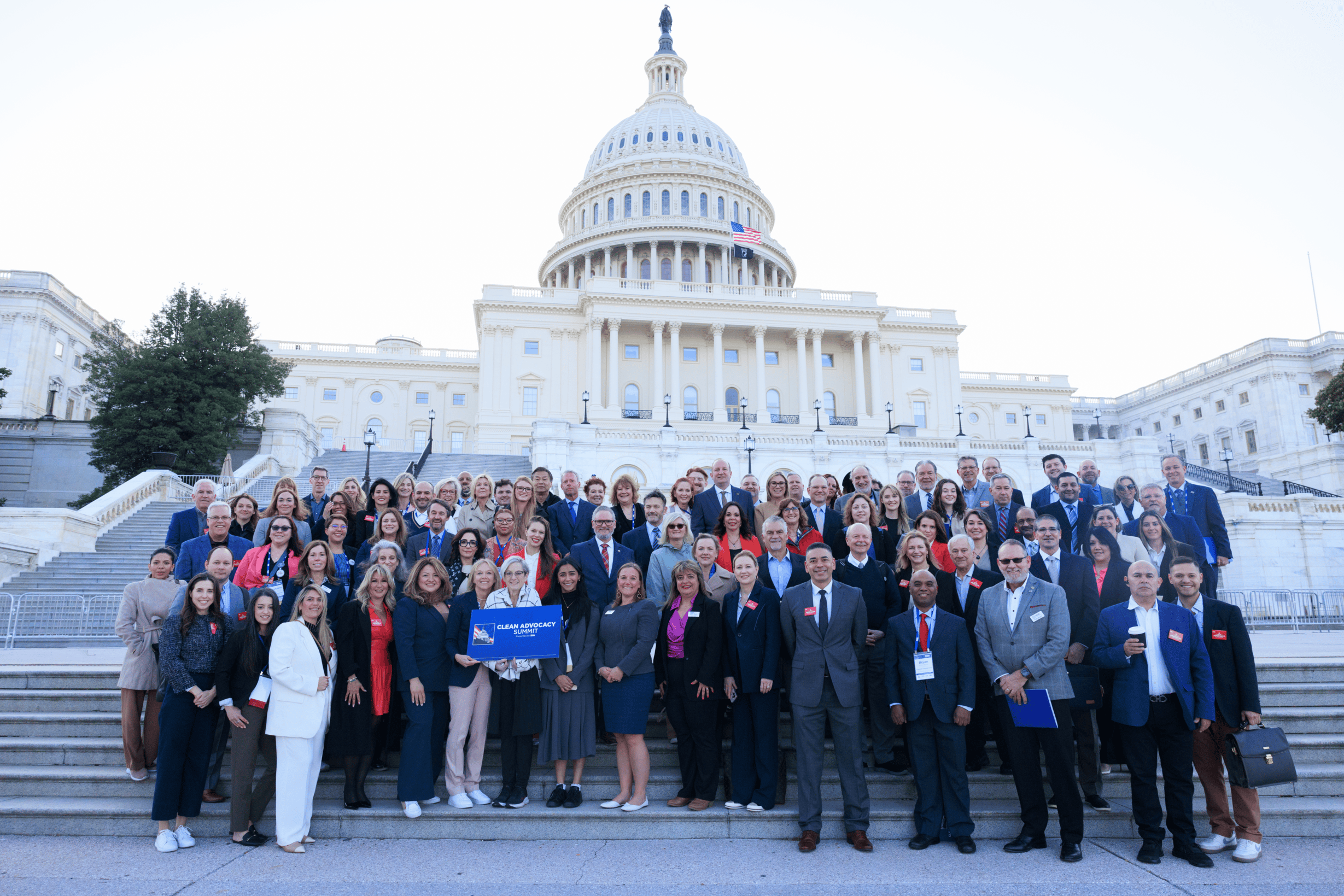
The 2026 ISSA Clean Advocacy Summit, March 23–24 in Washington, DC, is almost here and registration is filling fast. This is the premier advocacy event for the cleaning and facility solutions industry and your chance to elevate, celebrate, and shape the future of clean. If you haven’t registered yet, now is the time.
Top 5 Reasons to Attend
- Gain exclusive insights into federal policies impacting your business, from labor shortages and workforce reforms to EPA’s cleaning-product registration and ending period poverty.
- Meet face-to-face with your congressional delegation during our impactful “Hike the Hill” visits.
- Network with industry leaders from across the country.
- Learn from Washington insiders and top advocacy experts.
- Celebrate the value of clean at the inaugural International Cleaning Week Awards Dinner.
Schedule at a Glance
March 22
8 pm — Informal Networking Meetup, Royal Sonesta Hotel
March 23 — Royal Sonesta Hotel
8:30–11 am — Pre-Event Workshops (optional, select during registration)
11 am–5 pm — Education, Keynotes, & Training
6–9 pm — International Cleaning Week Awards Reception & Dinner (included)
March 24
8 am–4 pm — Congressional Meetings, Capitol Hill
4–6 pm — Closing Reception, Royal Sonesta Hotel
Hear Why Leaders Are Attending
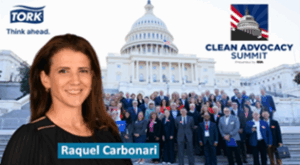
Hear from Raquel Carbonari, Brand Activation Director at Tork, an Essity Brand, on why industry leaders are calling this one of the most impactful events of 2026. Watch the video now
Record Support for 2026 Summit
ISSA is co-hosting this year’s summit with: the Alliance for Expanding America’s Workforce (AEAW); Building Service Contractors Association International (BSCAI); INDA, the Association of the Nonwoven Fabrics Industry; Institute of Inspection Cleaning and Restoration Certification (IICRC); International Franchise Association (IFA); New England Sanitary Supply Association (NESSA); Pacific Association of Business Service Contractors (PABSCO); and the Restoration Industry Association (RIA). Learn more
Register Now
Member: US$550; Nonmember: US$750
Registration is limited—don’t miss your chance to make your voice heard in our nation’s capital! Register now

Last Call! Register for Our Free ICW26 Webinar
International Cleaning Week, March 22–28, is almost here! How will you and your business celebrate the value of clean? ISSA has simple, high-impact ways for you to make ICW26 count:
💡 Get inspired
Jump-start your ICW26 planning with actionable ideas during our free webinar How to Leverage International Cleaning Week 2026 this Wednesday, January 28. Register now for the free webinar
It’s official—Washington, DC will celebrate Cleaning Week when ISSA members descend on the nation’s capital for the 2026 Clean Advocacy Summit! Thank you to DC Mayor Muriel Bowser for proclaiming an official Cleaning Week (see above proclamation) and ISSA member company Melwood for securing the proclamation.
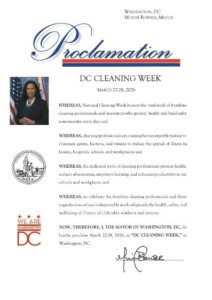
It’s official—Washington, DC will celebrate Cleaning Week when ISSA members descend on the nation’s capital for the 2026 Clean Advocacy Summit! Thank you to DC Mayor Muriel Bowser for proclaiming an official Cleaning Week (see above proclamation) and ISSA member company Melwood for securing the proclamation.
📜 Secure a Cleaning Week proclamation for your state
Help ISSA elevate the value of clean nationwide by requesting an official state Cleaning Week proclamation. Nearly every state offers a free online submission, and ISSA has already done the heavy lifting with a ready-to-use template.
We still need to submit 2026 Cleaning Week proclamation requests in nine states. Do you live and/or work in: AZ, IN, IA, LA, ME, NM, ND, TN, or WY? If so, contact ISSA’s Stacy Seiden by February 13 to help us reach our goal of proclaiming a Cleaning Week in all 50 states! Learn more here and/or contact ISSA’s Stacy Seiden.
Additional Updates
Regulatory
Compliance Deadline for Hazardous Communication Standard Extended
The U.S. Occupational Safety and Health Administration (OSHA) extended the compliance dates with its update to the Hazard Communication Standard final rulemaking. Manufacturers, importers, and distributors were initially required to evaluate certain substances by January 19, 2026. That deadline has now been extended to May 19, 2026. OSHA is making this update so that the agency has “time to publish the necessary guidance materials for the regulated community to review before the revised standard provisions take effect.” Learn more (Federal Register)
Treasury Releases Guidance on 100% Depreciation
The U.S. Treasury Department released guidance on claiming the 100% deduction for new depreciable property enacted last year in the One Big Beautiful Bill Act. The law allows businesses to immediately deduct the cost of new investments in many types of business property, rather than deducting it over several years. The guidance provides information for determining which property qualifies and determining the amount deductible. Learn more (IRS)
U.S. Freezes New Immigrant Visas for 75 Countries
The U.S. State Department paused issuing immigrant visas to citizens of 75 countries, including U.S. allies and adversaries, over concerns that “they may rely on public assistance in the future.” Learn more (CNBC)
Legislative
2026 EPA Budget Avoids Drastic Cuts
The U.S. House of Representatives and Senate passed a bipartisan US$8.8 billion budget for the Environmental Protection Agency (EPA) and other environmental agencies that largely avoids significant cuts proposed by the Trump Administration. Still, EPA’s fiscal year 2026 budget will be at an all-time low. Learn more (Cleaning & Maintenance Management)
Shutdown Odds Grow as Senate Republicans Won’t Remove DHS Funding
The chances of a partial shutdown of the U.S. government by the end of this week grew over the weekend due to outrage over federal immigration agents fatally shooting Alex Pretti in Minnesota, the second such incident this month. A growing number of Democratic senators warned that they won’t vote for a US$1.2 trillion package to fund federal government operations if it includes appropriations for the Department of Homeland Security (DHS), which oversees immigration enforcement efforts.
According to CNBC, the Senate’s Republican leadership won’t remove the DHS funding portion, despite that warning. In addition to DHS, the funding measure includes appropriations for the departments of Labor, Defense, Health and Human Services, Housing and Urban Development, Transportation, Education, State, and Treasury. Learn more (CNBC)
Legislation Reshapes Packaging Sustainability Claims
A new bill introduced by U.S. Representative Randy Weber (TX-14-R) is poised to harmonize packaging claim-related issues by creating a consistent federal framework under the Federal Trade Commission with the overarching goal of an improved circular economy. The Packaging and Claims Knowledge (PACK) Act specifically targets unverified claims like “recyclable,” “compostable,” and “reusable” that appear on consumer packaging, which, in combination with the current state of the recycling and composting infrastructure, can make it challenging to know what can be recycled. Learn more (Packaging Digest)
State News
CA Proposes New Regulations on Manual Dish Detergents, Shampoo Containing 1,4-Dioxane
On January 16, 2026, the California Department of Toxic Substances Control (DTSC) initiated rulemaking to list manual dish detergents and shampoo containing 1,4-dioxane at concentrations greater than 1 part per million (ppm) as Priority Products. The state proposes these regulations “due to the potential for exposure to 1,4-dioxane from these products and the potential to contribute to or cause significant or widespread adverse impacts to human health or the environment.” Once finalized, domestic and international manufactures of manual detergents and shampoo containing 1,4-dioxane at concentrations greater than 1 ppm sold in California would be required to comply with the Safer Consumer Products Regulations. The state is currently accepting public comments on the proposed regulations until March 2, 2026. Learn more (DTSC)
AL Senate Advances Bill to Restrict Environmental Regulation Expansion
A bill to restrict how Alabama state agencies would issue environmental regulations was recently approved by a state Senate committee. Senate Bill 71 would prohibit state agencies from adopting a rule to establish environmental protection standards more stringent than federal law or regulations. The bill also would provide that, in the absence of a federal law or regulation on an environmental matter, no state agencies may adopt a rule “unless the rule is based on the best available science and the weight of scientific evidence.” Learn more (Alabama Political Reporter)