ISSA Leg. & Reg. Update – Supreme Court Rules Emergency Tariffs Unconstitutional
 Welcome to the latest ISSA Legislative & Regulatory Update, a biweekly roundup of the public policies currently impacting the cleaning and facility solutions industry. This update touches on the Supreme Court ruling that emergency tariffs are unconstitutional, ISSA’s 2026 Clean Advocacy Summit, the bipartisan reintroduction of the Airborne Act, and more.
Want to stay informed about critical government affairs impacting the entire built environment? Sign up here to have the ISSA Legislative & Regulatory Update emailed directly to you every other week.
ISSA Advocacy
Supreme Court Rules Emergency Tariffs Unconstitutional
What it means: In a 6-3 ruling, the U.S. Supreme Court declared that tariffs introduced by President Trump under the International Emergency Economic Powers Act (IEEPA) are unconstitutional.
Why it matters: All IEEPA tariffs are no longer in force as of Friday, February 20. This includes the “fentanyl” tariffs—applied to goods from Canada, China, and Mexico, which President Trump claims have not done enough to halt the flow of fentanyl into the U.S.—and the “baseline” and “reciprocal” tariffs that imposed duties ranging from 10-44% on goods from almost all countries.
The ruling didn’t address whether and, if so, how the government should refund the US$134 billion collected via IEEPA tariffs over the last year. That issue will likely be sorted out by lower courts. The high court’s decision also doesn’t address the sector-specific tariffs imposed under Section 232 on products like steel, aluminum, and lumber.
On Saturday, Trump announced a new 15% global tariff on all imports entering the U.S. effective immediately. The new tariff replaces the 10% tariff that he announced on Friday shortly after the Supreme Court’s ruling. To impose the new tariff, Trump turned to Section 122 of the Trade Act of 1974, which allows a president to impose a levy of up to 15% for as long as 150 days to address problems caused by persistent trade deficits.
According to the White House, the new tariff doesn’t stack on top of tariffs imposed under Section 232, and products from Canada and Mexico already protected by a free-trade pact covering those nations and the U.S. also are exempt. In short, uncertainty surrounding tariffs continues for now.
What ISSA is doing: Your ISSA Advocacy Team is monitoring, engaging with policymakers, and educating our members as relevant information becomes available regarding this breaking news. The association opposes tariffs on components and raw materials used for “essential” cleaning and safety products and equipment. Learn more here (CNN) and here (CBS News)
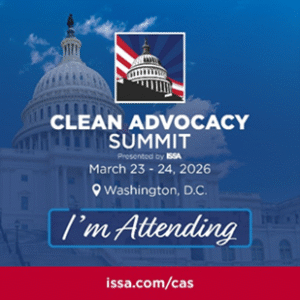
The 2026 Summit Is Almost Here: Be in the Room Where Industry Impact Happens
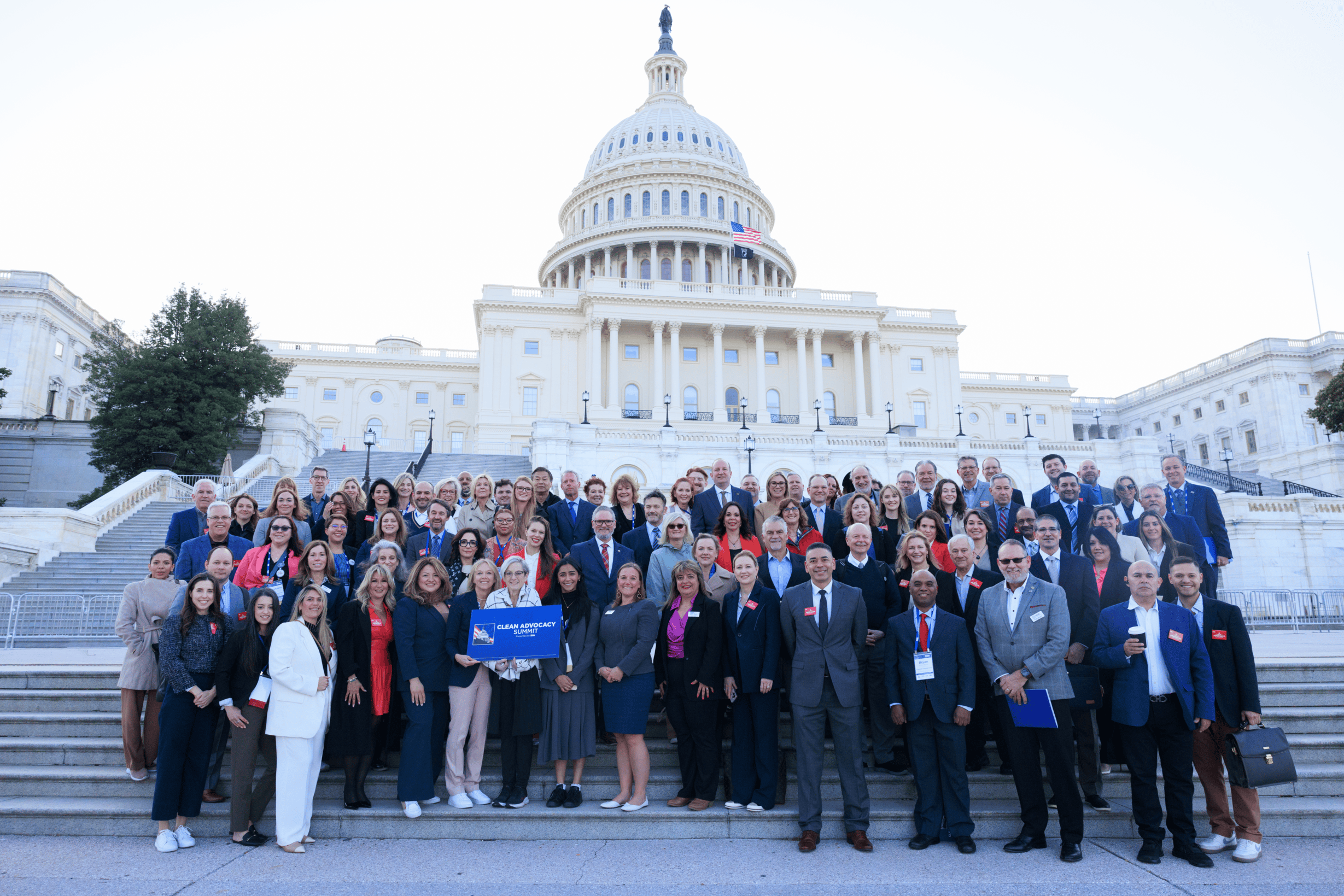
Are you attending the 2026 ISSA Clean Advocacy Summit? This is your chance to be in the room where the cleaning and facility solutions industry comes together in our nation’s capital to learn, connect, and advocate with real impact.
March 23–24 | Washington, DC
Registration closes March 15—space is limited.
When you attend, you won’t just hear about policy—you’ll be in the room where it’s shaped.
- Get insider briefings on the policies impacting your business—from labor shortages and workforce reforms to strengthening EPA and its Safer Choice Program and ending period poverty.
- Hike the Hill and be in the room with your congressional delegation, showing how our industry protects health, creates jobs, and strengthens the U.S. economy.
- Hear directly from Washington insiders and top advocacy experts you won’t find anywhere else.
- Connect face-to-face with industry leaders from across the country who share your challenges and your influence.
- Celebrate the value of clean at the inaugural International Cleaning Week Awards Dinner.
Member: US$550 | Nonmember: $750
👉 Register now before March 15 and be in the room!
Additional Updates
Legislative
Bipartisan Airborne Act Reintroduced
U.S. Representatives Don Beyer (D-VA-8) and Brian Fitzpatrick (R-PA-1) reintroduced the Airborne Act, legislation that would incentivize non-residential building owners to conduct indoor air quality assessments and upgrade their ventilation and air filtration systems. Learn more (Rep. Beyer)
Recycled Content Claims Bill Introduced in House
The Recycled Materials Attribution Act (RMAA) was recently introduced in the U.S. House of Representatives. The bipartisan bill aims to establish federal standards for recycling and recycled content marketing claims. RMAA would direct the U.S. Federal Trade Commission to update the Green Guides to conform with the legislation. It’s the latest federal push to harmonize recycling and recycled content definitions and labeling nationally. Supporters say that the legislation could protect consumers from misleading claims, while opponents worry that it would enable more “greenwashing.” Learn more (Packaging Dive)
DHS Shutdown: No Clear ‘Off-Ramp’
There’s no end in sight for the U.S. Department of Homeland Security (DHS) shutdown as both sides point fingers, while seemingly moving no closer to a resolution. DHS funding lapsed February 14, leaving much of the department working without pay.
The DHS shutdown has little effect on Immigration and Customs Enforcement because Congress approved billions in funding for the agency and for border security writ large in the “big, beautiful bill”—meaning that despite a funding lapse, deportations will continue. And while funding has lapsed for the department, the vast majority of DHS employees, including at the Transportation Security Administration, are considered essential, which means that they will continue running operations even if they’re doing so without pay. Learn more (The Hill)
Senate Republicans Rally behind USMCA, Trump’s Support Wavers
The U.S. Senate Finance Committee held a hearing on the United States-Canada-Mexico (USMCA) Trade Agreement on February 12. The hearing came ahead of the mandatory joint review of the agreement, which begins July 1. It’s expected that the administration will renegotiate or pull out of the agreement in favor of bilateral agreements. Learn more (NAM)
State News
Extended Producer Responsibility
IL: HB4546 would require manufacturers of household hazardous products in Illinois to create and fund a statewide program for collecting and safely disposing of hazardous household waste. Manufacturers would have to join a stewardship organization, register with the state, and pay for most collection, transportation, and disposal costs. (NAW)
What to Watch in 2026: Perhaps the biggest EPR news to date is the February 6, 2026, decision by the U.S. District Court for the District of Oregon granting the National Association of Wholesaler-Distributors a preliminary injunction to block enforcement of Oregon’s Plastic Pollution and Recycling Modernization Act pending a decision on the merits. The Oregon litigation has the potential to affect the scope of EPR programs across the country, potentially extending beyond packaging to other products. In the meantime, product manufacturers and retailers must continue to wrestle with how best to manage EPR compliance and related costs and business impacts. Learn more (The National Law Review)
ISSA’s Summary of Extended Producer Responsibility Laws: This comprehensive EPR summary tailored specifically for the cleaning and facility solutions industry provides our members with crucial insights into the regulatory requirements affecting packaging for commercial and household cleaning products. Learn more
Minimum Wage Legislation
VA: Virginia Governor Abigail Spanberger intends to sign legislation to raise Virginia’s minimum wage to US$15 per hour by 2028. Spanberger pledged her support after the Virginia Senate and House of Delegates passed Senate Bill 1 in a 20-19 vote with all present Democrats voting in favor. The bill would incrementally increase the Commonwealth’s minimum wage to $15 per hour by 2028 and ensure that future increases keep pace with inflation. Learn more (ABC 8 News)
MO & NE: Nebraska lawmakers passed a bill heading to the governor’s desk that would lower the minimum wage for workers aged 14 to 15 from US$15 to $13.50 an hour, while allowing a 90-day training wage of $13.50 for 16-to-19-year-olds. The legislation alters the $15 minimum wage approved by voters in 2022. And in Missouri, a bill recently introduced also seeks to support small businesses by lowering the minimum wage for individuals under 18. Learn more (CMM)
WV: A group of House delegates introduced legislation to increase West Virginia’s minimum wage to US$11 per hour, marking a significant jump from the current rate. House Bill 5485 would raise the state’s minimum wage effective January 1, 2027. West Virginia’s current minimum wage is $8.75 per hour—well below the proposed $11 rate. The measure also would adjust the sub-minimum training wage for workers under 20 years old, which currently allows employers to pay a lower rate during the first 90 days of employment. Learn more (5 WDTV)