Team Cleaning Methods: Improve Efficiency and Cleaning Quality
Cleaning operations today face increasing pressure to do more with less. Facility managers are expected to maintain high standards of cleanliness while managing labor shortages, rising costs, and tighter schedules. To meet these challenges, many organizations are turning to team cleaning—a proven method that improves efficiency, consistency, and accountability. When paired with standardized production benchmarks like those found in ISSA Cleaning Times resource, team cleaning becomes a powerful system for managing modern cleaning operations.
Team cleaning is not a new concept, but its relevance continues to grow as facilities seek smarter ways to allocate labor and maintain quality.
What Is Team Cleaning?
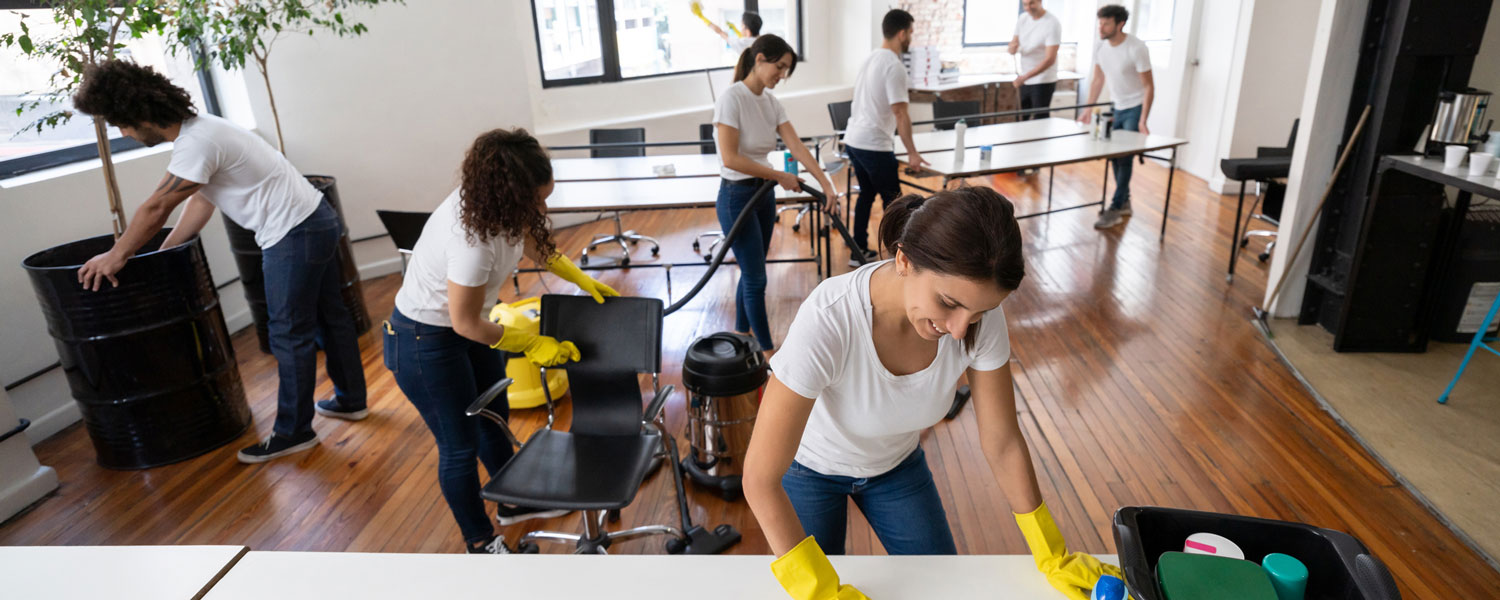
Team cleaning is a structured approach where cleaning staff work together as a coordinated unit, each responsible for specific tasks rather than entire areas. Instead of one person handling all cleaning duties in a space, tasks are divided among team members based on efficiency and repetition.
Common team cleaning roles include:
- Light-duty specialist (dusting, trash removal, surface wiping)
- Restroom sanitation specialist
- Vacuuming or floor care specialist
Each team member follows a defined route, completing their assigned tasks before moving on. This reduces wasted motion and creates a predictable workflow.
How Team Cleaning Improves Productivity
Productivity gains are one of the primary reasons organizations adopt team cleaning. By focusing on a limited set of tasks, workers can perform them faster and with greater consistency.
Key productivity advantages include:
- Reduced time spent switching tools and supplies
- Less walking between tasks
- Faster learning curves for new employees
- More accurate workload distribution
Using standardized cleaning times helps managers determine how many staff members are needed per shift and how long each task should take, removing guesswork from scheduling.
Team Cleaning vs. Traditional Zone Cleaning
Traditional zone cleaning assigns one person to complete all tasks in a specific area. While this method can work in small or low-traffic spaces, it often becomes inefficient in larger facilities.
Team cleaning offers several advantages over zone cleaning:
- Tasks are standardized instead of individualized
- Quality checks are easier because responsibilities are clear
- Absences are easier to manage without disrupting workflows
- Training is faster and more consistent
For schools, offices, healthcare facilities, and large commercial buildings, team cleaning often delivers better results with fewer resources.
Consistency and Quality Control Benefits
Consistency is critical in cleaning operations. Team cleaning supports quality control by ensuring that tasks are performed the same way, every time.
Because workers repeat the same tasks daily:
- Cleaning methods become standardized
- Supervisors can inspect specific tasks more effectively
- Errors are easier to identify and correct
- Performance expectations are clearly defined
This structure reduces variability and helps maintain reliable outcomes across shifts and teams.

Team Cleaning and Workforce Challenges
Labor shortages and high turnover continue to affect the cleaning industry. According to the U.S. Bureau of Labor Statistics, janitorial and cleaning occupations experience higher-than-average turnover, making efficiency and retention key concerns.
Team cleaning helps address these challenges by:
- Reducing physical strain through task specialization
- Improving job clarity and confidence
- Supporting faster onboarding for new hires
- Making workloads feel more manageable
Clear roles and predictable routines help employees feel successful in their work, which can improve morale and retention.
Training Is Critical for Successful Team Cleaning
Even the best cleaning system depends on proper training. Team cleaning requires workers to understand not only their individual tasks, but how those tasks fit into the larger workflow.
Effective team cleaning training includes:
- Task sequencing and movement patterns
- Proper use of tools and equipment
- Time expectations for each task
- Communication between team members
Facilities that invest in structured education programs often see smoother implementation and better long-term results. Industry-wide training resources, such as those found at ISSA Education, help support consistent skill development.
Adapting Team Cleaning for Multilingual Workforces
Many cleaning teams are multilingual, which can present communication challenges if processes are unclear. Team cleaning works well in diverse environments because it relies on visual cues, repetition, and standardized routines.
Successful adaptations include:
- Visual task guides and checklists
- Color-coded tools and zones
- Demonstration-based training
- Simple, consistent terminology
Regional education and support resources, such as those available through ISSA Latin America, help organizations implement team cleaning effectively across different languages and cultures.
When Team Cleaning Works Best
Team cleaning is most effective in facilities that have:
- Large or repetitive spaces
- Multiple staff members per shift
- Predictable cleaning schedules
- Defined performance expectations
Examples include:
- Office buildings
- Educational campuses
- Healthcare facilities
- Manufacturing and distribution centers
Smaller buildings may benefit from a hybrid approach that combines team cleaning principles with traditional methods.
Measuring Success with Team Cleaning
To ensure long-term success, organizations should track key performance indicators such as:
- Productivity per labor hour
- Quality inspection results
- Rework or complaint rates
- Employee turnover
Using standardized cleaning times and clear task definitions makes performance easier to measure and improve over time.
Why Team Cleaning Remains Best Practice
Team cleaning continues to be one of the most effective systems for managing modern cleaning operations. It supports efficiency, consistency, and workforce stability; three factors that are increasingly important in today’s facility environments.
When combined with accurate production data, proper training, and thoughtful supervision, team cleaning provides a scalable, sustainable approach to meeting cleanliness expectations without overextending resources.