ISSA Leg. & Reg. Update – Support EPA Safer Choice Program
 Welcome to the latest ISSA Legislative & Regulatory Update, a biweekly round up of the public policies currently impacting the cleaning and facility solutions industry. This update touches on supporting authorization of EPA’s Safer Choice Program, helping ISSA save the Work Opportunity Tax Credit, a newly released Menstrual Health State Report Card for each state, and more.
Want to stay informed about critical government affairs impacting the entire built environment? Sign up here to have the ISSA Legislative & Regulatory Update emailed directly to you every other week.
ISSA Advocacy
Support EPA Safer Choice Program Authorization
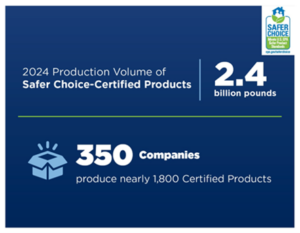
What it means: Safer Choice is a voluntary, science-based partnership that helps identify and promote products made with ingredients that are safer for human health and the environment, without sacrificing performance. The program provides a trusted, nationally recognized benchmark for “safer ingredients” claims, one that purchasers, consumers, and manufacturers rely on because it is grounded in U.S. Environmental Protection Agency (EPA) expertise and public accountability.
Why it matters: Authorizing Safer Choice in statute would protect the program from administrative elimination and secure the federal investment that hundreds of cleaning and facility solutions companies and institutional purchasers have already built into their product development pipelines and procurement decisions.
Because there is currently no requirement that all consumer products be made with safer ingredients, Safer Choice fills a meaningful gap; authorization would make clear that Congress recognizes and supports that role. It also would signal to the manufacturers of cleaning products that the standard is durable enough to justify continued investment in reformulation—the kind of long-horizon commitment that drives real market transformation.
What ISSA is doing: ISSA invites the entire built environment to join us in expressing our strong support for the introduction and enactment of bipartisan legislation to authorize EPA’s Safer Choice Program. Add your name in support of Safer Choice now
Help Save the Work Opportunity Tax Credit
What it means: The Work Opportunity Tax Credit (WOTC) expired on December 31, 2025, largely because of a fundamental misunderstanding of the program’s practical mechanics and its role as a proven bridge to private-sector employment.
Why it matters: Contrary to the perception of a simple “corporate handout,” U.S. employers, including the cleaning and facility solutions industry, rely on WOTC to offset the significant training and onboarding costs associated with hiring individuals who face chronic barriers to the workforce like veterans, SNAP recipients, and returning citizens.
What ISSA is doing: ISSA Advocacy needs your help to explain the WOTC process to Congress. By discussing your business’s specific process and how a retroactive extension of WOTC will help both you and your employees, Congress can reactivate a stalled system that provides thousands of Americans with a path to self-sufficiency. Contact ISSA’s Stacy Seiden to help explain to Congress how WOTC helps your cleaning business.
New Menstrual Health State Report Card Highlights Policy Gaps—and Bipartisan Solutions—to End Period Poverty
What it means: A new Menstrual Health State Report Card for each state was released by Days for Girls International in partnership with ISSA. The report reveals significant gaps in how U.S. states address period poverty, while pointing to clear, bipartisan solutions already working across the country.
Why it matters: The report cards evaluate all 50 states across five core policy areas: menstrual product taxation, provision of products in schools, provision in public buildings, provision in incarceration facilities, and Good Samaritan liability protections for donated menstrual products. The findings are stark: nearly one‑third of states received an overall grade of “D” or below, while only five states earned an “A” or “A‑” for their menstrual health policy landscape.
What ISSA is doing: “These report cards make something unmistakably clear—that making period products as available as toilet paper and paper towels is not only the right thing to do, but it is also good public policy,” said John Nothdurft, Vice President of Government & Public Affairs at ISSA. “The cleaning and facility solutions industry has a critical role to play in addressing period poverty because our industry manages restrooms, supply chains, and procurement decisions in buildings across America. When states increase access to period products in public facilities, it’s our industry that implements those policies on the ground. We need clear, consistent legislation that allows us to ensure dignity and access for everyone who walks through the doors of the buildings we serve.” Learn more
Industry Leaders Rally on Capitol Hill for 2026 Clean Advocacy Summit
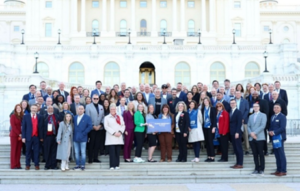
More than 140 cleaning and facility solutions leaders took to Capitol Hill on March 24, meeting with 150+ congressional offices across 30+ states during ISSA’s 2026 Clean Advocacy Summit, driving home the industry’s critical role in public health and economic stability.
In addition to visiting congressional offices, ISSA met with the White House Office of Public Liaison, U.S. Environmental Protection Agency’s Office of Pesticide Programs, and Department of Education, spotlighting workforce shortages, apprenticeship opportunities, and the importance of clean, healthy spaces.
Momentum that continues: “This is a great experience—preparation and tools made us effective,” said 2026 summit attendee and ISSA State Advocacy Leader Tricia Holderman. Advocacy doesn’t stop when the meetings end. With momentum building, the next Clean Advocacy Summit heads to Washington, DC from April 12–13, 2027.
Take action: Reinforce the message that our advocates brought to the Hill—engage your members of Congress now on the legislative priorities for our industry. Learn more
Additional Updates
Regulatory
Tariffs
CBP: Tariff-Refund Process Will Take 60–90 Days to Issue Returns
U.S. Customs and Border Protection’s (CBP) refund system for defunct Trump administration levies will take between 60–90 days to deliver returns for eligible entries, according to a new page on the agency’s website. The timeline could be extended if “a compliance concern requires further CBP review,” per the agency.
CBP previously said that the process would take up to 45 days between entry acceptance and refund delivery. The agency shared the prior timeframe in the latest in a series of court-ordered development updates with the Court of International Trade.
As part of the most recent update, CBP said that the four stages of the system, known as the Consolidated Administration and Processing of Entries (CAPE), were between 60% and 85% complete. A subsequent court filing confirmed that the agency was on track to go live with the CAPE system on April 20. CBP confirmed this go-live date on its new page, reiterating that the first phase of the system’s rollout is designed to handle entries “liquidated in the previous 80 days.” Learn more (Supply Chain Dive)
Workforce
IRS Publishes List of Occupations Qualified for ‘No Tax on Tips’
The U.S. Department of the Treasury and Internal Revenue Service (IRS) issued final regulations on the “No Tax on Tips” provision. The “One, Big, Beautiful Bill” final regulations provide the list of occupations that receive tips and define “qualified tips” that eligible taxpayers may claim as a deduction.
As in the proposed regulations, the final regulations group the occupations into eight categories, including “Hospitality and Guest Services” and “Home Services.” To be a qualified tip, the tip must be received by a worker in an occupation on the List of Occupations that Receive Tips. The final regulations further clarify that qualified tips must satisfy certain requirements. Learn more (IRS)
- DOL releases new outdoor, indoor heat-related hazards guidance (CMM)
- DOL launches tools to strengthen supply chains (CMM)
Legislative
House Extends Protections for Haitian Migrants
The U.S. House of Representatives voted to extend temporary protected status for Haitian migrants through 2029, with several Republicans supporting the Democratic-endorsed measure to curb President Trump’s immigration crackdown. The bill now heads to the Senate, where it faces an uphill battle against a Republican majority. If it does pass the Senate, the White House has said that Trump would veto the legislation. Learn more (NPR)
- Senate GOP losing patience with Speaker Johnson as DHS faces funding crisis (The Hill)
- House lawmaker wants vote on bill to impose government-dictated contracts on employers and employees (JD Supra)
State News
PFAS: State Legislation, Federal Action
States are using multipronged approaches to manage per- and polyfluoroalkyl substances (PFAS)–reducing or eliminating their use in common-source material, setting testing and reporting limits, and directing and financing remediation. The federal government has set maximum contaminant levels for a few select PFAS chemicals and offers various funding mechanisms to assist states with management. Learn more (NCSL)
- Colorado: newest battleground in EPR fight (The National Law Review)
- Virginia to raise minimum wage by 2028 (Virginia Mercury)
- Washington governor signs law establishing employer requirements during federal immigration enforcement