Continuous Improvement
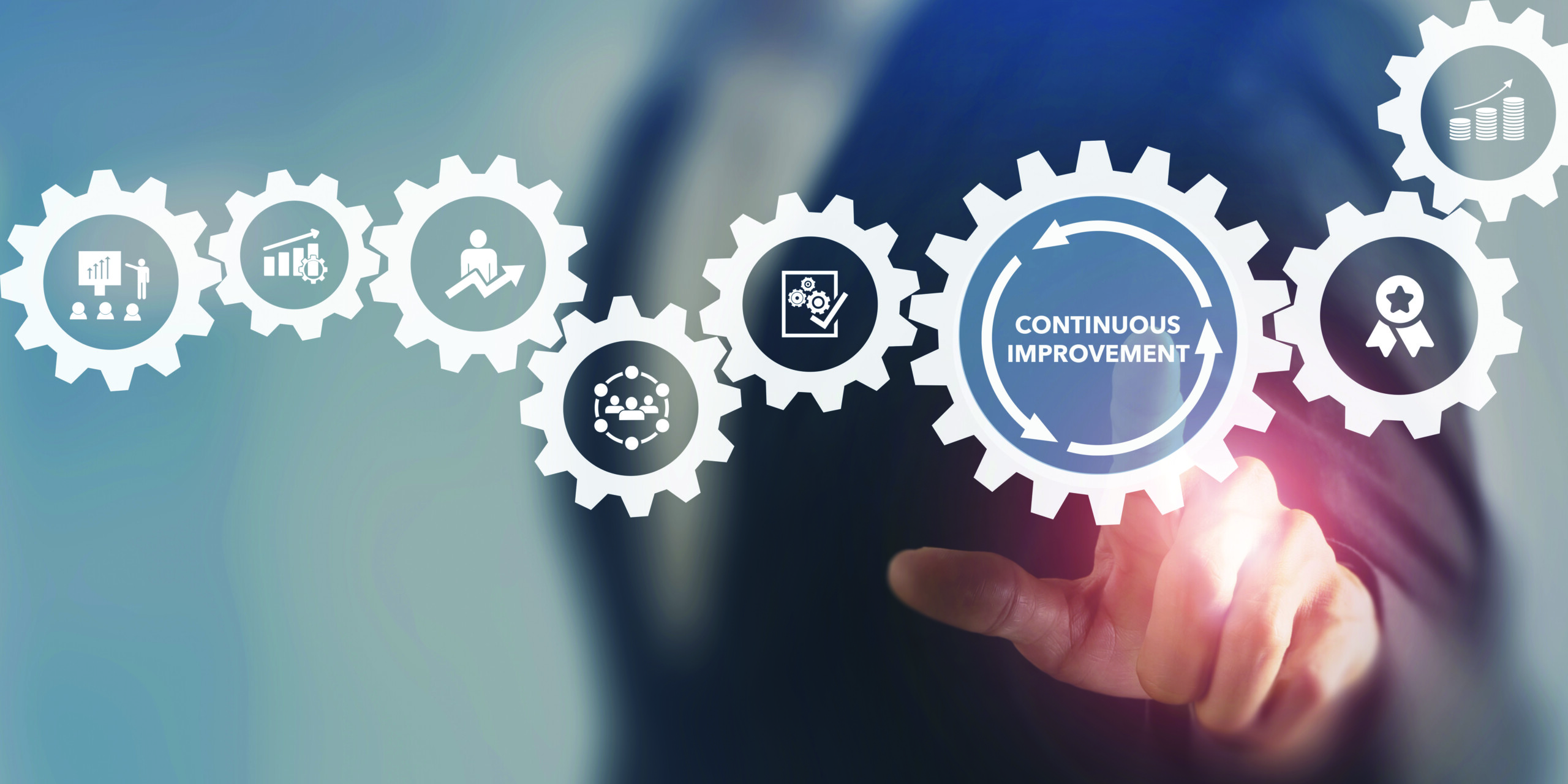
Crossing the chasm and reaching the tipping point are important milestones, but they do not guarantee long-term success. They simply mean the market is ready. The real value of physical AI is realized only when your organization learns how to improve performance over time. That is where continuous improvement becomes essential.
Why continuous improvement matters
Thomas Edison’s quote reminds us that real progress rarely comes in the form of a dramatic breakthrough. He wrote, “Opportunity is missed by most people because it is dressed in overalls and looks like work.” This quote emphasizes that valuable opportunities are often overlooked because they require significant effort, hard work, and persistence rather than appearing as an immediate, easy gain. More often, opportunity appears as a disciplined effort. In cleaning and automation, success does not come from admiring innovation but from doing the hard work of deployment, improvement, and execution.
Productivity is the practical proof that continuous improvement is working. A robot may run every night, but that alone does not mean your organization is improving. Results come when front-line workers use the technology to reduce wasted labor, improve route consistency, increase useful coverage, lower downtime, and align robotic output with service expectations. In short, physical AI creates the possibility; continuous improvement turns that possibility into measurable operational gain.
This is not a new lesson. W. Edwards Deming taught managers that improvement requires more than inspection after the fact. It requires understanding the process, measuring variation, and learning from feedback. Lean production advanced the same idea by showing that organizations improve when they remove waste, standardize work, and empower people closest to the process to solve problems. Physical AI fits directly into that tradition because it makes front-line work more visible and measurable than ever before.
From data to productivity
In cleaning operations, this means managers can move beyond guesswork. Instead of relying only on anecdotal reports, they can review route completion, square footage covered, battery performance, exception alerts, idle time, missed runs, and uptime. But data alone does not create improvement. Organizations must know what to do with it. Data has to be accurate, reconciled, and tied to controllable outcomes. Otherwise, leaders risk confusing digital activity with real progress.
That is why continuous improvement begins with asking better questions. Did the robot clean the intended space or simply move through it? Did it reduce manual labor in a meaningful way, or just add a new layer of supervision? Did it increase consistency from shift to shift? Did it improve floor care without disrupting the broader workflow? These are productivity questions, not just technology questions.
Process, people, and the role of front-line leadership
The answer usually comes down to process.
A successful robotic cleaning program requires a disciplined review of how the machine fits into existing operations. Routes may need to be adjusted. Obstacles may need to be removed. Charging practices may need to be improved. Operators may need more training. Support teams may need faster response times. Labor plans may need to be rebalanced to redeploy people to detail work, touchpoints, restrooms, or other tasks where human judgment adds greater value. In that sense, the robot is not replacing management; it is demanding better management.
This is where front-line leadership becomes critical. The manager of the future must do more than supervise labor and inspect outcomes. That manager must connect technology, process, and accountability. They must understand how to interpret robotic data, spot patterns, identify waste, and coach the team toward better performance. That is a very different role from simply assigning work at the beginning of the shift. It is a move from oversight to operational learning.
Turning physical AI into scalable results
The same principle applies at the organizational level. In earlier articles, I argued that strategy must be translated into measurable action through implementation and execution. Continuous improvement is what keeps that system alive. It is the discipline that links strategic intent to operating reality. If the strategy is to use robotics to improve labor productivity, reduce cost, and increase consistency, then continuous improvement is the mechanism that tests whether those claims are actually happening and what adjustments are needed when they are not.
This is also why Geoffrey Moore’s idea of the whole product still matters after adoption. The robot alone is not enough. Sustainable productivity requires training, dashboards, support, maintenance, workflow redesign, and regular review. That support structure is what allows organizations to move from pilot success to repeatable performance at scale.
In the end, continuous improvement is how physical AI makes sense. It transforms robotics from a promising tool into a dependable source of operational advantage. The point is not simply to prove that a robot can clean a floor. The point is to build a better cleaning system around that capability.
That is when physical AI begins to deliver tangible results: not when the machine starts moving, but when the organization starts learning. I look forward to sharing the third and final article in this series in our next issue: Profitability: Where physical AI and continuous improvement pay off. Why productivity is only the beginning. I hope you enjoy it.